Ultimate Guide to Crowdfunding for Creative Projects

Ultimate Guide to Crowdfunding for Creative Projects
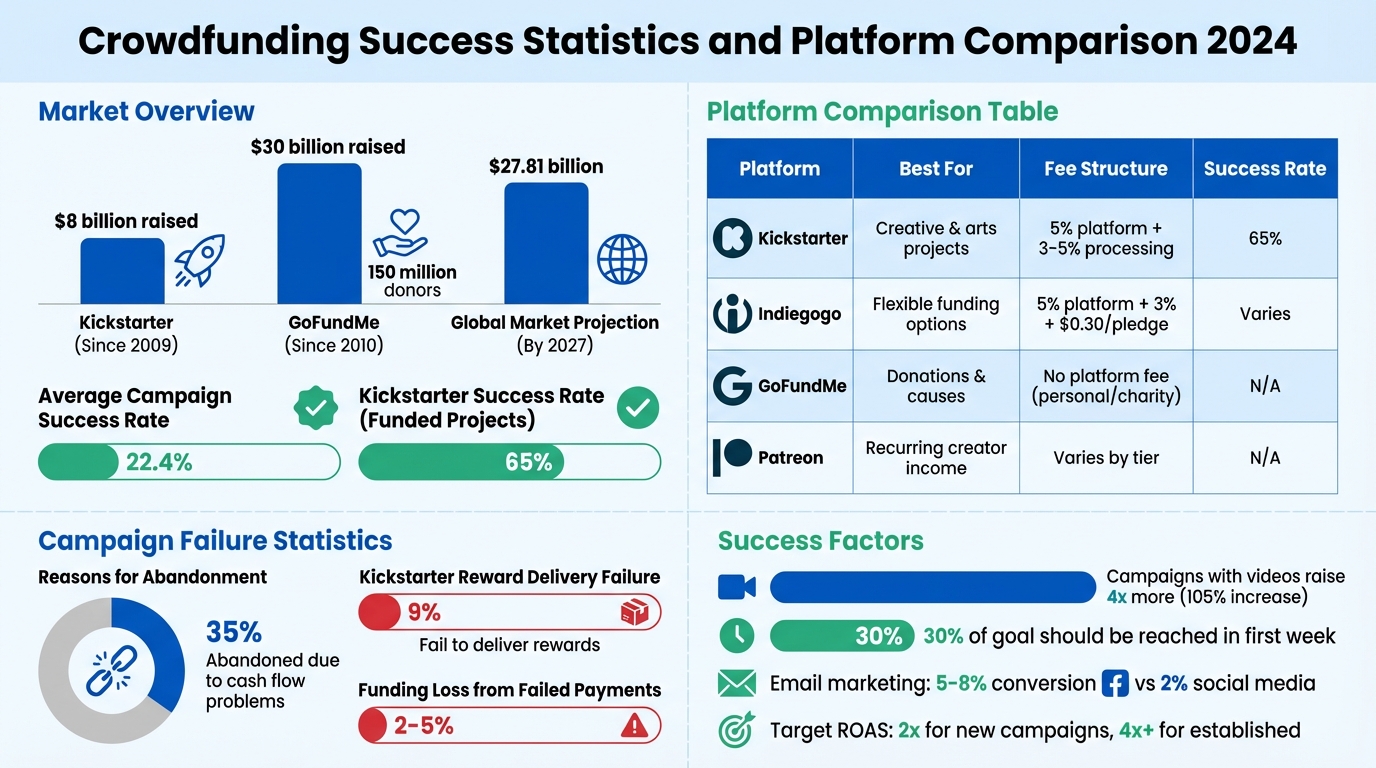
Crowdfunding is a way to fund projects by gathering small contributions from a large number of people, typically via online platforms like Kickstarter or GoFundMe. It’s a direct approach where creators pitch ideas to the public, often offering rewards in return. This method has grown massively, with Kickstarter raising over $8 billion since 2009 and GoFundMe surpassing $30 billion since 2010.
Key points to know:
- Types of crowdfunding: Reward-based (offers incentives), donation-based (relies on goodwill), and equity or debt-based (investors gain stakes or expect repayment).
- Popular platforms: Kickstarter (creative projects), Indiegogo (flexible funding), GoFundMe (donations), and Patreon (recurring income).
- Why it works: It reduces financial risks, offers direct audience validation, and serves as a marketing tool.
To succeed:
- Set clear financial goals, accounting for fees and taxes.
- Choose the right platform for your project type.
- Create a strong pitch with visuals, videos, and tiered rewards.
- Promote heavily in the first 48 hours to secure early momentum.
- Keep backers updated and manage funds carefully to deliver on promises.
Crowdfunding is an effective way to bring ideas to life while engaging directly with supporters. This guide breaks down the steps to plan, launch, and manage a campaign successfully.
Crowdfunding Success Statistics and Platform Comparison 2024
How to Plan Your Crowdfunding Timeline and Strategy
sbb-itb-66f4c95
Choosing the Right Crowdfunding Model
Your choice of crowdfunding model shapes how you present your project, fulfill obligations, and meet backer expectations. For creative ventures, reward-based crowdfunding stands out, allowing you to keep full ownership while offering enticing rewards. On the other hand, donation-based crowdfunding appeals to those who support your vision without expecting anything in return, making it ideal for causes or community-driven projects. Meanwhile, equity and debt-based models involve giving up ownership stakes or taking on loans, which are better suited for startups with high growth potential rather than individual creative efforts. Let’s dive into these models to help you find the best fit for your project.
Reward-Based Crowdfunding
This model allows backers to fund your project in return for rewards, such as the final product, exclusive items, behind-the-scenes access, or personalized experiences. It’s a go-to for creative projects because it not only validates market interest but also lets you maintain complete ownership.
Take Adam Poots, for example, who raised $12.4 million in November 2016 for his board game Kingdom Death: Monster 1.5 on Kickstarter - $4 million of which came in the first hour. Similarly, the Pimax 8K VR Headset campaign brought in over $4.2 million from around 6,000 backers, who received the headset as their reward. Another standout was the Wavelength Board Game, which used video storytelling and community engagement to exceed its funding target by 300% within just 72 hours.
Platforms like Kickstarter and Indiegogo are popular for this model. Kickstarter charges a 5% platform fee, plus payment processing fees of 3–5%, while Indiegogo charges a 5% platform fee along with transaction fees of 3% + $0.30 per pledge. Before choosing this route, carefully estimate the costs and timeline for producing and shipping rewards. Underestimating these expenses can lead to budget issues and harm your reputation.
Donation-Based Crowdfunding
This approach relies on the goodwill of supporters who contribute because they believe in your mission, not because they expect a product or financial return. It’s commonly used for social causes, nonprofit efforts, personal emergencies, or community-oriented creative projects.
For example, the Ocean Cleanup Initiative raised $300,000 through a global donation campaign by clearly communicating its mission and funding goals. GoFundMe, a platform synonymous with donation-based crowdfunding, has facilitated over $30 billion in contributions from 150 million donors since 2010. While GoFundMe generally doesn’t charge a platform fee for personal or charitable campaigns, standard transaction fees still apply.
This model works best when your project has an emotional or social appeal. Since there are no rewards to offer, storytelling and building a strong connection with your audience are key to driving contributions.
Equity and Debt-Based Crowdfunding
While donation-based models cater to cause-driven efforts, equity and debt-based crowdfunding are geared toward businesses with larger growth ambitions.
With equity crowdfunding, investors receive shares or ownership stakes in your company in exchange for funding. This model is regulated under securities law and is primarily used by high-growth startups. However, it comes with challenges - Reg CF fundraising, for instance, dropped from $423 million in 2023 to $343.6 million in 2024, reflecting the hurdles involved. Debt-based crowdfunding, also known as peer-to-peer lending, involves backers acting as lenders, expecting repayment with interest on a set schedule. It’s often an alternative to bank loans for businesses with steady revenue.
These models are rarely suitable for individual creative projects. Equity crowdfunding requires giving up some ownership and decision-making power, while debt crowdfunding means committing to repayments regardless of your project’s success. For most freelancers and creative professionals, reward or donation-based crowdfunding is a better fit, offering fewer regulatory challenges and better alignment with creative goals.
Choosing the right model is a critical step in planning your crowdfunding campaign, so weigh your options carefully to ensure they match your project’s needs.
Planning Your Crowdfunding Campaign
Once you’ve got your creative vision and chosen crowdfunding model in place, the next step is detailed planning. This is where interest turns into funding. A well-thought-out plan includes financial preparation, selecting the right platform, and crafting a strategy that resonates with backers. With the growing popularity of crowdfunding, competition for attention is intense. Start by figuring out exactly how much money you need before zeroing in on a platform and developing your campaign approach.
Setting Clear Financial Goals
Your funding goal should cover the bare minimum needed to deliver on your promises. Begin by listing all costs - materials, production, shipping, and logistics. Then, factor in platform fees (Kickstarter typically charges 5%) and payment processing fees (around 3–5% per transaction via services like Stripe). Don’t overlook taxes; crowdfunding income is usually taxable, so it’s smart to consult a tax expert to estimate your obligations.
Shipping is a common budget buster. Thoroughly research shipping rates, especially if you’re offering international delivery, and add a 10–15% buffer for unexpected expenses. Remember, on platforms like Kickstarter, which operate on an all-or-nothing model, missing your goal by even $1 means you get nothing. So, your goal should reflect the absolute minimum needed to complete your project and deliver rewards.
A key milestone to aim for: securing 30% of your goal in the first week. This creates a sense of credibility and demand, encouraging more backers to join. Your target should also be realistic based on what you can raise from your immediate network - friends, family, and loyal supporters who will likely contribute on day one. Setting an overly ambitious goal could cause your campaign to lose steam before it gains wider traction.
Researching and Selecting a Crowdfunding Platform
Not all crowdfunding platforms are created equal. Each caters to specific project types and audiences. For instance:
- Kickstarter: Best for creative and arts projects, with over 250,000 successful campaigns. Its newsletters and curated features help boost visibility.
- Indiegogo: Offers both fixed and flexible funding models, plus an InDemand feature to keep selling after your campaign ends.
- Seed&Spark: Tailored for filmmakers, providing distribution opportunities and funding once you reach 80% of your goal.
- Patreon: Ideal for content creators seeking recurring income through tiered membership rewards.
When choosing a platform, consider fees, geographic availability, and legal requirements. For example, Kickstarter boasts a 65% success rate for projects that hit their funding target. Picking a platform that aligns with your project’s nature, audience, and funding model is a crucial step.
Once you’ve chosen your platform, focus on developing a clear strategy that communicates your project’s value effectively.
Creating a Campaign Strategy
A strong campaign strategy answers three core questions: Why does your project matter? What’s in it for backers? How will you keep them engaged? Build a compelling narrative that emphasizes your project’s importance and your journey, while tying it back to the promises you’ve made. Take inspiration from Ryan Grepper’s 2014 Kickstarter campaign for a high-tech cooler, which raised over $13 million. His success stemmed from clear communication, polished visuals, and a well-thought-out tiered reward system.
"As the old adage goes: facts tell, stories sell. When it comes to eliciting customer engagement, a campaign with a good story is an unparalleled strategy."
– Eric Corl, Co-Founder, IdeaBuyer.com
Including a professional pitch video can make a huge difference - campaigns with videos raise up to four times more, with video content increasing results by 105%. Structure your rewards thoughtfully, offering a mix of digital perks and premium options. Creating urgency through limited high-level rewards can also motivate backers to pledge more.
Plan your communication updates ahead of time. For example, successful Indiegogo campaigns post at least four updates and add an average of 12 new perks after launch. Build an email list and rally your personal network before going public to ensure a strong start - aim to hit 30% of your goal in the first 48 hours. Once you’ve reached your initial target, introduce stretch goals to unlock additional features and maintain momentum throughout the campaign.
Running and Managing Your Campaign
When managing your campaign, focus on three essential areas: crafting a compelling campaign page, maintaining active communication with backers, and ensuring consistent promotion across multiple channels.
Building a High-Converting Campaign Page
Your campaign page is your first impression - make it count. Start with a hero video that’s 2–3 minutes long. The first 60 seconds are crucial since nearly half of viewers stop watching after that point. Use this time to highlight the why behind your project. A great example is the 2015 Flow Hive campaign. Cedar and Stuart Anderson built anticipation for months and delivered a concise video explaining their innovative beehive design. They hit their $70,000 goal in just 8 minutes and ultimately raised $14.9 million from over 40,000 backers.
Next, ensure your campaign page is visually clean and communicates value instantly. Structure your reward tiers like a ladder that encourages backers to climb higher. Include:
- Low-cost entry options: These make pledging accessible (the average Kickstarter pledge is around $25).
- Early-bird specials: Offer these for the first 48 hours to create urgency.
- High-value bundles: These should feel too good to pass up.
"The real magic is creating a reward ladder where backers look at each tier and think, 'Okay, this is good, but what if I just scroll down a little more?' until they hit a tier so packed with value they can't help but back it".
Add credibility with testimonials, media coverage, and endorsements. Use GIFs to demonstrate your product in action - these are more engaging than static images and don’t require clicking play. Keep your funding goal realistic; smaller targets build momentum faster than intimidatingly high numbers. Lastly, optimize for mobile since over 60% of users browse campaign pages on their phones. Remember, even a 3-second delay in page load time can cut conversions by 30%.
Once your page is set, shift your attention to keeping backers engaged throughout the campaign.
Engaging with Backers During the Campaign
Transparency is key to keeping backers involved. Provide updates twice a week and respond to inquiries within 12–24 hours. Updates should cover milestones, production progress, and any challenges. Campaigns that update bi-weekly or more frequently see backer satisfaction scores 15% higher than those that update less often.
The mid-campaign slump (typically days 7–21) can be a challenge. Combat this by introducing stretch goals, surprise add-ons, or hosting live Q&A sessions. Encourage backers to become part of the process by asking for input on design tweaks or color options - this fosters a sense of community and shared ownership .
If problems arise, address them immediately. Explain the issue, provide a revised timeline, and keep communication open. Proactive crisis management helps maintain trust . To ensure no backer inquiry goes unanswered, consider using a support ticket system or dedicated email.
While engaging backers, don’t forget to keep your promotional efforts strong to sustain momentum.
Promoting Your Campaign
The first 48 hours are critical - launch with a strong promotional push and maintain visibility throughout. Email marketing is your most effective tool, with conversion rates between 5% and 8%, compared to roughly 2% for social media. Tailor your email outreach: early adopters want exclusivity and technical details, while casual supporters respond better to social proof and practical benefits.
Allocate 10% to 30% of your funding goal for marketing and advertising. For paid ads, aim for a 2× Return on Ad Spend (ROAS) for new campaigns and 4× or higher for established brands. Using lookalike audiences based on high-value backer data can lower Cost Per Click by about 20%. Micro-influencers (5,000–50,000 followers) are another great resource. In 2025, a dedicated post from a micro-influencer cost between $300 and $1,500 and delivered higher engagement.
Take inspiration from Kingdom Death: Monster 1.5. In November 2016, creator Adam Poots leveraged his loyal fanbase from prior campaigns to raise $4 million in the first hour, eventually reaching $12.4 million. Tailor content for each platform - use Reels for Instagram, Threads for Twitter, and professional posts for LinkedIn. When reaching out to the press, focus on unique angles or milestones to grab attention .
"From our experience running marketing campaigns in a variety of verticals, we've found that crowdfunding is the best acquisition channel and results in the best ROI for your advertising dollar."
– Will Ford, President and Co-founder, LaunchBoom
Managing Payments and Cash Flow After Your Campaign
Once your campaign is successfully funded, the next challenge is turning pledges into actual funds and managing cash flow effectively. This step is crucial to ensure you can deliver rewards as promised and avoid common pitfalls.
Mismanaging this phase can lead to serious issues - around 35% of successful crowdfunding campaigns are abandoned after funding due to cash flow problems, and roughly 9% of Kickstarter projects fail to deliver rewards. Let’s break down how to handle this stage smoothly.
Securing Timely Payments
Kickstarter provides a 14-day window after your campaign ends to process backers' credit card payments. During this period, expect to lose about 2% to 5% of your total funding due to failed payments caused by issues like expired cards, insufficient funds, or fraud flags. To recover these funds, use an automated email sequence:
- First email: Notify backers immediately when a payment fails.
- Second email: Send a friendly reminder 2–3 days later.
- Final email: Issue a last notice before dropping the pledge.
"A well-executed dunning strategy is more than just a collection tool - it's a customer service opportunity." – PledgeBox
To avoid delays in receiving payouts, finalize your business verification documents and connect your bank account to your payment processor (like Stripe or PayPal) before your campaign ends. Keep in mind that Kickstarter deducts a 5% platform fee, and payment processing takes another 3% to 5%, leaving about 9% of your funds allocated to fees.
Using a pledge manager like PledgeBox can help you collect additional funds for shipping, taxes, and add-ons that platforms like Kickstarter often overlook. Address validation tools (e.g., Google Maps-powered systems) can also save you from costly reshipment expenses caused by typos in shipping addresses.
For freelancers juggling multiple revenue streams, tools like Paid on Time provide upfront payment security through legally binding agreements and one-click charges. This ensures stable cash flow while managing creative projects. The platform charges a 5% transaction fee but has no monthly costs.
Budgeting for Post-Campaign Expenses
"A solid budget isn't just about tracking what you spend; it's the very foundation of your campaign, ensuring you can actually deliver on your promises to backers without hitting a cash crunch." – PledgeBox
Proper budgeting is essential to meet your commitments. Here’s a breakdown of typical cost allocations:
| Budget Category | Typical Allocation | Considerations |
|---|---|---|
| Manufacturing & Tooling | 30% – 40% | Include mold costs and minimum order quantities (MOQs). |
| Shipping & Fulfillment | 20% – 30% | Covers packaging, labor, and delivery fees. |
| Platform & Payment Fees | 8% – 10% | Kickstarter and payment processor fees. |
| Marketing & Advertising | 5% – 15% | Spent on pre-launch and live campaigns. |
| Contingency Fund | 10% – 20% | A safety net for unexpected costs. |
For manufacturing, secure 3–5 quotes and account for MOQs and one-time tooling fees. When it comes to shipping, avoid flat-rate fees; instead, create specific zones (e.g., Domestic, Western Europe, Rest of World) to prevent deficits.
Set aside a contingency fund of 10% to 20% of your budget to handle surprises like manufacturing delays, shipping price increases, or currency fluctuations. After deducting the 8% to 10% in platform and payment processing fees, every dollar matters. Use your pledge manager’s storefront to offer add-ons during the post-campaign survey. This can inject extra funds to cover manufacturing or shipping costs.
Maintaining Backer Relationships
Your backers are the reason your campaign succeeded, so keeping them informed is critical. Start with a thank-you message as soon as your campaign ends, and provide regular updates as you move through production stages. If delays arise, communicate promptly instead of waiting.
A great example is Canary, a smart home security company that raised nearly $2 million on Indiegogo in 2013. They gained a reputation for transparency by keeping backers informed about production delays.
Set up a centralized customer service system, such as an FAQ page or a dedicated support email, to handle inquiries. Use your post-campaign survey not only to gather data but also to offer additional products or clarify reward selections.
"Your goal here is to get your rewards fulfilled in a timely manner resulting in happy backers who will continue to support your business!" – Roy Morejon, President of Enventys Partners
Clear and consistent communication builds trust and leaves a lasting impression. Every interaction is a chance to strengthen relationships and lay the groundwork for future projects.
Conclusion
Crowdfunding Essentials Recap
Running a successful crowdfunding campaign requires meticulous planning, smooth execution, and consistent follow-up. Start by building an email list and creating buzz before launch. The first week is crucial - aim to secure at least 30% of your funding goal early on to establish credibility and momentum. Your campaign page should tell a compelling story, complete with high-quality visuals and a concise explanation of the problem you're solving. A short, engaging main video (under 2.5 minutes) can make a big difference in capturing attention.
Active engagement is key to keeping your campaign alive. Quickly respond to inquiries, share updates on milestones, and use testimonials to build trust. Offer tiered rewards, ranging from affordable digital perks to premium options, to appeal to a broad audience. Once you reach your goal, consider adding stretch goals to maintain excitement and encourage further contributions.
The work doesn’t stop when the campaign ends. Delivering rewards on time is critical for maintaining your credibility. Budget carefully for production, shipping, and platform fees, and always set aside funds for unexpected costs. Keep backers informed throughout the process, treating them like part of your community rather than just customers. This approach ensures a smoother transition from campaign to completion.
Final Tips for Creative Professionals
Review the basics and keep these additional strategies in mind to maximize your campaign’s potential.
"Crowdfunding works best when treated as a structured, strategic launch - not a quick cash grab." – Vaibhav Totuka, Qubit Capital
Timing is everything. Avoid launching during December, January, July, or August, as these months are often filled with holidays and vacations that can distract your audience. Aim to deliver your final product within nine months of receiving funding, and try to have as much of the project completed as possible before launching. Keep in mind that crowdfunding pages can show up in search results - so a failed campaign could leave a lasting mark on your professional reputation.
For freelancers, maintaining steady cash flow is critical. Tools like Paid on Time help secure upfront payment agreements, ensuring reliable income during the fulfillment phase.
The global crowdfunding market is projected to grow to $27.81 billion by 2027, with an average campaign success rate of 22.4%. Treat your campaign as a professional launch with clear objectives, engaging visuals, and authentic communication. By consistently connecting with your backers and delivering on your promises, you’ll not only strengthen your reputation but also lay the groundwork for future projects.
FAQs
How do I pick the best crowdfunding model for my project?
To pick the right crowdfunding model, it’s important to understand the four main types:
- Rewards-based crowdfunding: Backers receive non-financial rewards, such as products or services, in return for their support.
- Donation-based crowdfunding: Focused on charitable causes, where contributors give without expecting anything in return.
- Equity-based crowdfunding: Investors receive shares or ownership stakes in the company they’re funding.
- Debt-based crowdfunding: Also known as peer-to-peer lending, this involves borrowing funds with an agreement to repay them over time, often with interest.
Your choice should depend on your specific goals. Are you offering a product or service as a reward? Seeking investors to take a stake in your business? Or raising funds without the need for repayment? Match your model not only to your objectives but also to your target audience and how you plan to engage them.
What should I include in my funding goal to avoid running out of money?
When planning your funding goal, it’s crucial to account for all project expenses - production, materials, shipping, and platform fees. This ensures you won’t run out of money during the process.
Make sure the goal you set is realistic. It should be enough to cover everything needed to deliver on your promises. At the same time, think about whether you could still complete the project if you only hit a portion of your goal. Setting an overly high target might backfire, making it harder to meet expectations and fulfill rewards.
How can I avoid cash-flow problems after my campaign funds?
To sidestep cash-flow problems after securing campaign funds, it's essential to plan carefully and manage your finances wisely. Start with precise demand forecasting and scalable production planning to keep spending in check. Develop a thorough financial plan that includes realistic goals, detailed expense estimates, and backup strategies. By aligning your spending with actual demand, you can maintain steady growth and reduce the risk of depleting your funds.