7 Tips to Avoid Payment Scams as a Freelancer
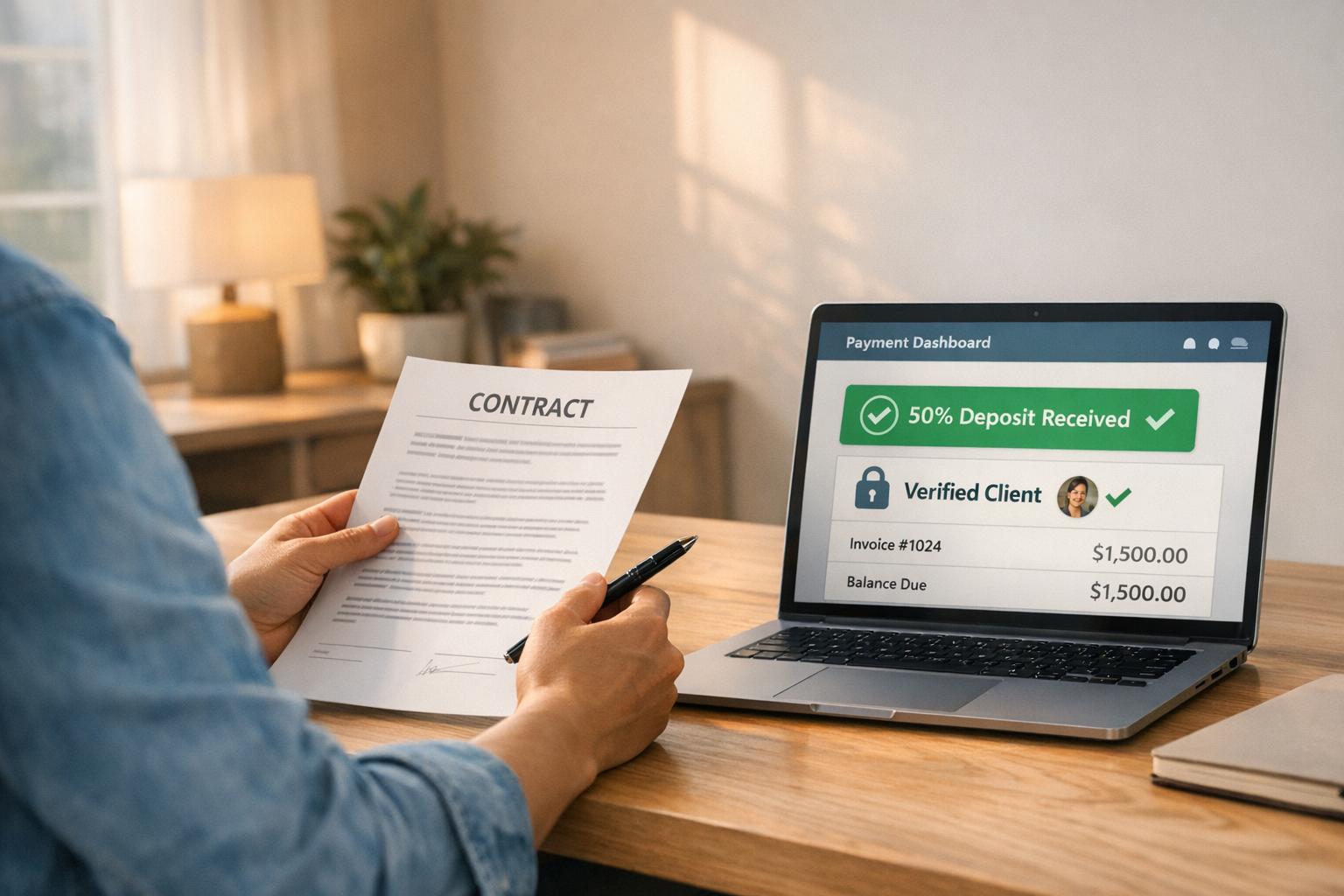
7 Tips to Avoid Payment Scams as a Freelancer
Freelancers lose millions every year to scams - and you don't have to be one of them. Here's how you can protect yourself:
- Verify clients: Research their identity, check for professional emails, and confirm legitimacy on platforms like LinkedIn or Upwork.
- Avoid upfront fees: Never pay for "onboarding" or "security deposits." Scammers often use these to steal your money.
- Use secure payments: Stick to traceable methods like PayPal, Stripe, or escrow services. Avoid gift cards or crypto.
- Sign contracts: Always get written agreements that outline payment terms and ownership rights.
- Beware of overpayment schemes: Fake checks and requests to refund "extra" money are red flags.
- Stick to platforms: Keep communication and payments on trusted freelance sites to avoid losing protections.
- Request deposits: Secure 30%-50% upfront for larger projects to reduce risks.
With 44% of freelancers reporting unpaid work, these steps can help you avoid scams and safeguard your income.
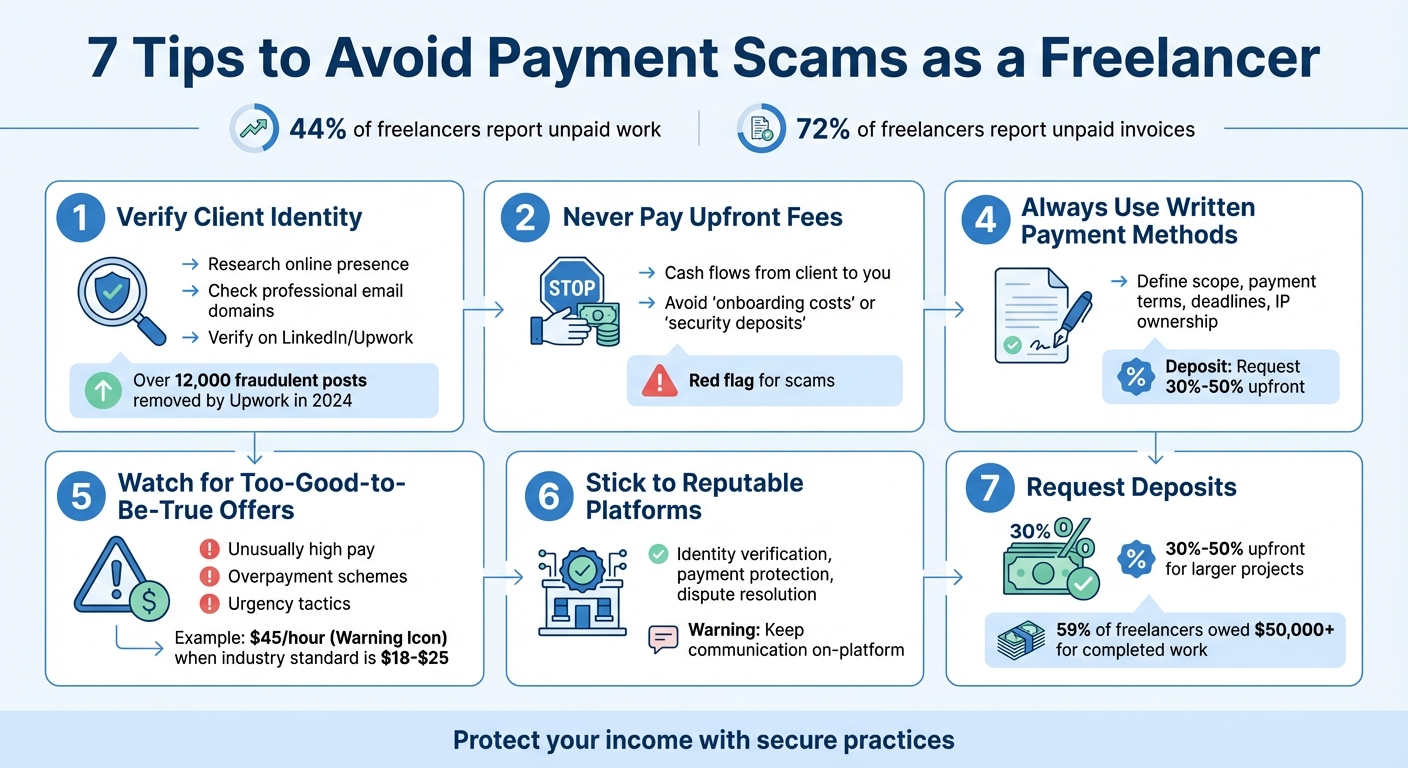
7 Essential Tips to Avoid Freelancer Payment Scams
1. Verify Client Identity Before Starting Work
Checking Client Legitimacy
Before diving into any project, it’s essential to confirm the client’s identity. Start by researching their name and company online. Legitimate businesses usually have professional websites, active LinkedIn profiles, and a consistent digital presence. If there’s little to no online trace, that’s a warning sign.
Also, take a close look at their communication channels. Emails from professional domains (like @companyname.com) are more reliable than those from free services like Gmail or Yahoo. Scammers often create email addresses that look almost identical to real ones by tweaking a letter or adding extra characters. If someone claims to represent a well-known company, reach out to that company directly using the contact details on their official website to confirm the offer.
Platforms like Upwork offer additional trust signals. Look for markers such as "Identity Verified", "Payment Verified", spending history, and freelancer feedback. In fact, Upwork’s Trust & Safety team removed over 12,000 fraudulent posts in 2024 alone.
Red Flags to Watch For
Be cautious of clients who insist on communicating off-platform before a contract is signed. This often bypasses standard monitoring and can be a ploy for scams. Other warning signs include vague job descriptions, unusually high pay for simple tasks, or skipping interviews and portfolio reviews. If something feels suspicious, trust your gut - it’s often right.
sbb-itb-66f4c95
2. Never Pay Upfront Fees or Expenses
The Direction of Cash Flow
When it comes to freelancing, the cash flow should always go one way: from the client to you. Since you're the one providing the service, paying upfront fees is unnecessary and often a red flag for scams.
Scammers might label these fees as "onboarding costs", "application processing", "software licenses", "security deposits", or even "training materials." However, legitimate companies either supply these resources themselves or include them in the job offer. They won't charge you for the chance to work. As Olayoyin Olorunmota from Grey.co explains:
"You're providing the service, not the other way around. Any job that requires payment up front is likely a scam."
Common Upfront Fee Scams
One popular scam is the reimbursement scam. Here’s how it works: a client asks you to purchase specific equipment or software with the promise of reimbursing you in your first paycheck. Sometimes, they’ll even send you a fake check for more than the agreed amount, asking you to wire back the "extra." Once the check bounces, you’re left with the loss.
Another tactic involves so-called "verification fees" or "security deposits" that scammers claim are needed to access job details or activate an employee ID. Be especially cautious if a client claims they accidentally overpaid you and requests a refund through wire transfer or cryptocurrency. This is almost always a check-cashing scam designed to leave you out of pocket.
These scams highlight the importance of protecting your funds and refusing to pay any amount before you’ve started working.
Protecting Yourself
If a client demands money upfront, it’s a clear signal to walk away. Stick to trusted platforms that offer escrow or milestone payment systems, where funds are held securely until the work is completed.
Also, keep all communication on the platform where you found the job. Scammers often try to move conversations to apps like Telegram or WhatsApp to bypass platform security. If someone insists on taking the conversation off-platform before a contract is in place, treat it as a serious warning sign.
3. Use Only Secure Payment Methods
Secure Payment Methods
Not all payment methods offer the same level of protection, and for freelancers, sticking to secure options is crucial. The safest choices include platform-based escrow services, regulated bank transfers (like ACH or wire transfers), and trusted processors such as PayPal, Wise, and Stripe. These methods are not only traceable but also come with built-in regulations and dispute resolution systems.
On the flip side, steer clear of untraceable or high-risk payment methods. Red flags include cryptocurrency transfers, gift cards, and personal checks. These methods can leave you vulnerable to scams. As Olayoyin Olorunmota from Grey.co cautions:
Avoid using untraceable payment methods like direct crypto transfers, especially with first-time clients. Instead, use secure platforms that allow you to track payments and lodge disputes if necessary.
Personal checks, for example, can bounce even after being deposited. By prioritizing secure methods, you set a solid foundation for safe and reliable transactions.
Use of Reputable Platforms
In addition to choosing secure payment methods, working through reputable freelance platforms adds an extra layer of safety. Platforms like Upwork, Fiverr, and Toptal offer built-in escrow systems that hold client funds until you’ve completed the work. Before starting a fixed-price project, ensure that each milestone is funded in escrow. On platforms like Upwork, look for clients with a "verified payment method" badge to confirm their financial reliability.
For large projects, breaking the work into smaller milestones ensures you’re paid at key stages, reducing the risk of non-payment if a client disappears. If you’re working directly with a trusted client off-platform, consider requesting an upfront deposit - typically 30% to 50% - before beginning any work.
Taking transactions off-platform, however, means losing access to built-in protections like payment security and dispute resolution. Tools like Paid on Time can help mitigate this risk by securing payment agreements upfront. They create legally binding contracts and allow one-click charges upon project completion, minimizing the chances of clients disappearing without paying.
4. Always Use Written Contracts and Agreements
Written Agreements and Contracts
A solid written contract is your ultimate safety net when it comes to avoiding payment scams. Without one, you’re left vulnerable if a client vanishes after you’ve delivered your work. No matter the size of the project, having a formal agreement ensures your rights are protected by clearly outlining deliverables and payment terms. Think of it as an essential layer of security that complements other protective measures.
Your contract should spell out every detail, including the project scope (and what’s excluded to avoid scope creep), specific payment deadlines (e.g., “payment due by January 15, 2026”), an upfront deposit of 30%–50%, and a clause stating that intellectual property remains yours until full payment is received.
"Without a contract, you are not guaranteed the money you are owed." – April Abion, Content Manager, Twine
Make sure to secure a digital signature before starting any work. Platforms like DocuSign or HelloSign make it easy to collect signatures digitally. If a client refuses to sign, consider it a red flag and walk away. For international projects, include details about which country’s laws will apply and specify the currency to avoid confusion or disputes.
To take it a step further, platforms like Paid on Time can create legally binding agreements and lock in payment methods upfront. This way, you’re not just relying on a signature - payment details are secured before work begins, and clients can pay with a single click once the project is complete.
How to Identify & Avoid Scams as a Freelancer
5. Watch for Too-Good-to-Be-True Offers
Scammers often attract freelancers with offers that seem far above industry standards. For instance, if you spot a writing job offering $45 per hour when the typical range is $18–$25, it's a red flag. With over 55 million freelancers worldwide, this community has become a prime target for scams.
These enticing offers are designed to distract you from verifying their authenticity. Common tactics include requests for onboarding fees or unexpected expense payments. Legitimate clients will never ask you to pay upfront for any costs related to the job.
Another common scam is the overpayment scheme. In this setup, a client sends a check for more than the agreed amount and asks you to return the difference. When the check inevitably bounces, you're left covering the loss.
"If you are sent a check for the full amount or an overpayment, don't attempt to deposit it! The scam is that they then ask you to send the rest back via bank transfer." – Jennifer R. Povey
Be cautious of language that creates urgency or pushes you to act quickly. Scammers often use phrases that create pressure, discouraging you from doing proper research. They may also try shifting communication to platforms like WhatsApp or Telegram to avoid detection by official systems. If a client insists on avoiding official communication channels or refuses to provide a professional email address, it's a strong indicator to walk away.
Before accepting any high-paying offer, take these steps to protect yourself: research the client on LinkedIn, confirm their company website is legitimate, and check their payment history on the platform. It's also wise to request a deposit of 30%–50% before starting work. If the client hesitates or refuses, you've likely dodged a scam. Staying vigilant and thoroughly verifying client details can save you from falling victim to fraudulent schemes.
6. Use Reputable Platforms for Transactions
Using well-established freelance platforms adds an extra layer of security between you and potential scammers. These platforms typically verify identities, secure payments, and help resolve disputes when they arise. Considering that 44% of freelancers have reported not being paid by a client at some point, having these safeguards in place is crucial.
Look for platforms that offer features like verification badges, "Payment Verified" indicators, and public client reviews. These tools make it easier to gauge a client's trustworthiness. Verification processes often include checks like government ID submission, location confirmation, and phone verification. Additionally, client reviews and job success scores can provide insights into their payment history and overall reliability. By combining these platform features with client verification best practices, you strengthen your defenses against payment issues.
This strategy ties into earlier advice about secure payment methods and written agreements. Always ensure project milestones are fully funded in escrow and use the platform's time-tracking tools to maintain transparent records - steps that can save you significant headaches later.
"GoLance Support Team strongly recommends that all users communicate, work, and conduct payments ONLY on the platform as the best preventive measure against the most common scams." – goLance Support Team
Keeping all communication and payments within the platform is essential. It creates a clear paper trail that support teams can review if any disputes arise. On the other hand, if a client asks you to move conversations to external messaging apps or suggests payment methods like CashApp, cryptocurrency, or personal checks, you risk losing the platform's payment protection and the evidence needed for dispute resolution.
Some platforms, like Paid on Time, go even further by offering legally binding agreements and securing payment methods upfront. This allows you to charge clients with a single click once the work is finished, eliminating manual invoicing and reducing the likelihood of disputes.
7. Secure Payments Upfront with Binding Agreements
Getting payment commitments before starting work is a smart way to protect yourself from scams and avoid dealing with unreliable clients. With 72% of freelancers reporting unpaid invoices - and 59% of those owed $50,000 or more for completed work - requesting an upfront deposit isn’t just smart; it’s essential.
To safeguard your earnings, use binding agreements and secure payment methods. Here’s how these strategies can help.
Written Agreements and Contracts
Lock in your upfront deposit with a clear, written agreement. This should outline the deposit amount, payment deadlines, and refund policies. Most freelancers ask for 20% to 50% of the project total as a deposit, but for smaller jobs, full payment upfront might be more practical. Be sure to include a detailed scope of work and list exclusions to avoid unpaid extra tasks.
"Serious clients never blink at a deposit, only the ones planning to micromanage you to death do." – Hooman Bahrani, Founder, Birch Stream Digital
Secure Payment Methods
After finalizing the contract, choose secure payment methods to collect your deposit. Reliable options include bank transfers, Stripe, or PayPal. If a client seems hesitant, consider an escrow service to add an extra layer of security. For digital work, you can also send watermarked or incomplete versions until the final payment is received.
Tools like Paid on Time simplify this process even further. They allow you to create binding agreements and securely store the client’s payment information upfront. Once the work is done, you can charge them instantly - no need for manual invoices. This streamlined approach removes the hassle of chasing payments and ensures everything is settled smoothly from the start.
Conclusion
Payment scams are a serious issue for freelancers, with 44% reporting instances of unpaid work. The good news? Many of these scams can be avoided by taking a few smart precautions.
Here’s a quick rundown: Always verify your client’s identity before starting a project. Use written contracts that clearly outline deliverables and payment terms. And stick to secure payment methods that offer built-in protections. As Olayoyin Olorunmota from Grey.co wisely notes:
A good contract protects both parties from misunderstandings or shady behavior and helps enforce accountability.
It’s also important to stay on trusted platforms that offer dispute resolution. Moving payments off-platform might seem convenient but often leaves you vulnerable to losing protections. These practices don’t just prevent scams - they also help ensure consistent and reliable payments.
For added peace of mind, tools like Paid on Time can simplify the process. They let you create binding agreements, secure payment details upfront, and charge clients with one click after completing the work. Following these steps safeguards your income and strengthens your professional reputation. Trust your instincts, prioritize secure practices, and never compromise when it comes to protecting your payments.
FAQs
What are the biggest red flags a client is trying to scam me?
When evaluating job opportunities, watch out for several warning signs. These include unrealistic salary offers, unclear job descriptions, or pressure to take communication off the hiring platform. Be cautious if you're asked to complete unnecessary test projects, receive unsolicited checks, encounter unusual payment methods, or are provided with questionable tax documents. If something doesn’t sit right, trust your instincts and proceed with caution.
What payment method is safest for a first-time client?
When working with a first-time client, it's best to choose a secure payment method like ACH transfers or PayPal. To protect both parties, make sure to establish clear, written payment terms. These should include details like upfront deposits or milestone payments, which help reduce the chances of fraud or misunderstandings.
How can Paid on Time help me avoid getting stiffed?
Paid on Time ensures you’re safeguarded against non-payment by streamlining the entire payment process. It lets you set up clear agreements with clients, secure payment methods in advance, and charge them with just one click once the work is done. These tools help minimize disputes and make sure you receive your payments promptly.